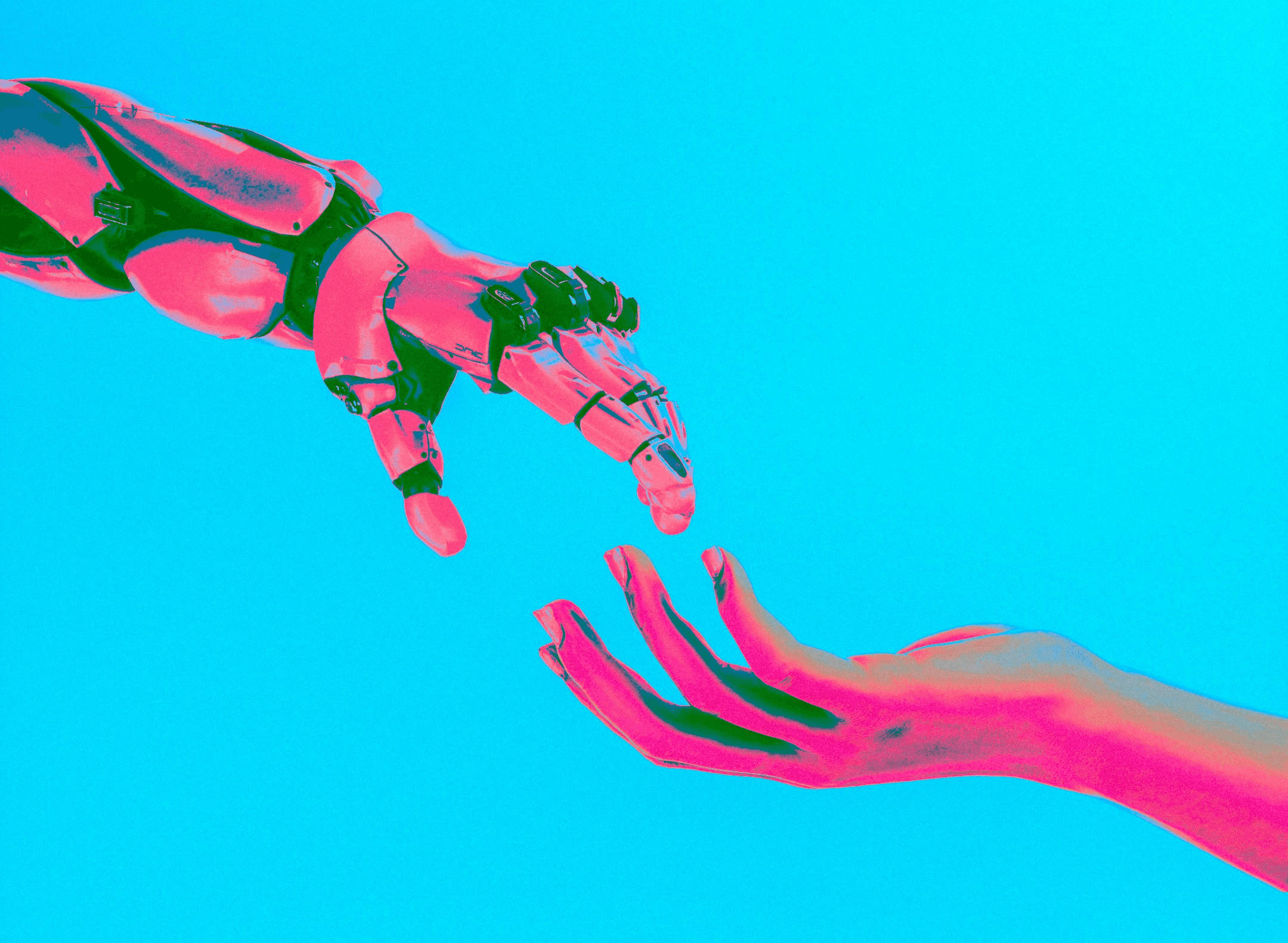
Thinking with images: how AI generation is changing the way we see
Thinking with images: how AI generation is changing the way we see
Matthew Underhill
Junior Video Creative
Matthew Underhill
Junior Video Creative
AI image generation has become central to my creative process. Tools like Midjourney and Nano Banana Pro have proven themselves not just as visual software but as a new way of thinking with images and of finding out what a half-formed idea might want to become. Whilst much of the conversation around AI image generation focuses on prompt formulas and parameter tricks, what interests me more is why these tools feel so different, beyond the obvious fact that AI has completely reconstructed how images can be made in the first place. Why do they open directions you didn’t know you were reaching for? And why does working with them feel like having a second imagination running alongside your own? As I’ve continued using them, their impact has become clearer. They don’t just change what we can produce; they change how we see.
AI image generation has become central to my creative process. Tools like Midjourney and Nano Banana Pro have proven themselves not just as visual software but as a new way of thinking with images and of finding out what a half-formed idea might want to become. Whilst much of the conversation around AI image generation focuses on prompt formulas and parameter tricks, what interests me more is why these tools feel so different, beyond the obvious fact that AI has completely reconstructed how images can be made in the first place. Why do they open directions you didn’t know you were reaching for? And why does working with them feel like having a second imagination running alongside your own? As I’ve continued using them, their impact has become clearer. They don’t just change what we can produce; they change how we see.
AI image generation has become central to my creative process. Tools like Midjourney and Nano Banana Pro have proven themselves not just as visual software but as a new way of thinking with images and of finding out what a half-formed idea might want to become. Whilst much of the conversation around AI image generation focuses on prompt formulas and parameter tricks, what interests me more is why these tools feel so different, beyond the obvious fact that AI has completely reconstructed how images can be made in the first place. Why do they open directions you didn’t know you were reaching for? And why does working with them feel like having a second imagination running alongside your own? As I’ve continued using them, their impact has become clearer. They don’t just change what we can produce; they change how we see.
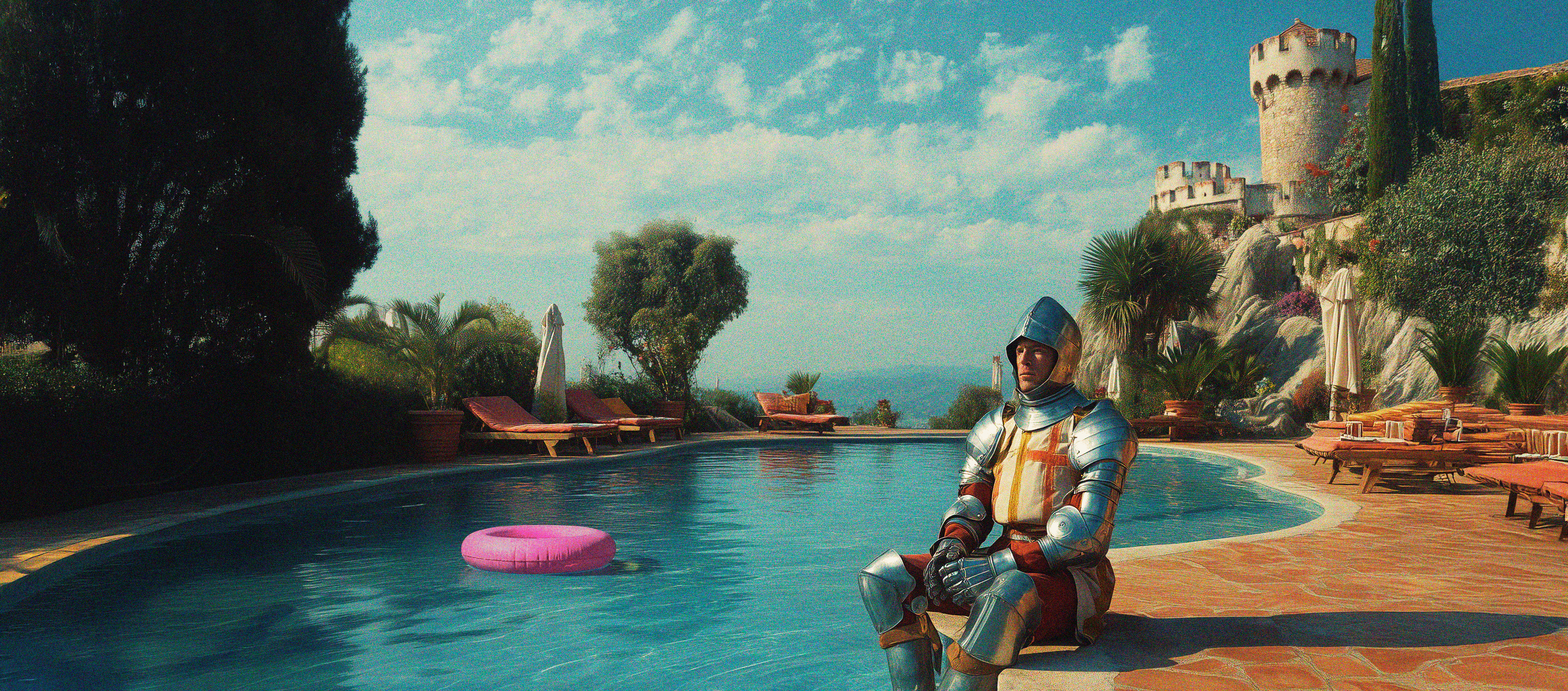
From vision to discovery
In traditional practice, vision precedes execution. An art director imagines the frame, and a team bends reality to match that internal picture. With generative tools, however, that hierarchy flips. You describe a hunch, the model returns a swarm of visual possibilities, and only then do you recognise what you were really after.
Creative marketing has always rewarded this ability, though it has never fully named it. We call it taste, intuition, or the eye. Now these systems make that intuition visible, showing in real time how small adjustments in tone or composition can shift meaning.
A ‘bad’ image is no longer a failure; it’s a reference point, a map of what not to do and, by contrast, a clearer outline of what you value. Take something as banal as a bowl of fruit on a table. Typed bluntly, the result is equally blunt: generic, lifeless, and forgettable. But add a few cues - lighting, material, a cinematic reference - and suddenly the scene becomes a mood, a story, or a frame from a film that never existed.
What fascinates me isn’t that AI can make the bowl look good, but that prompting forces you to articulate choices you’d normally leave unspoken. What kind of table? What quality of light? What visual language? What emotional temperature?
Working this way has sharpened my eye for composition, not because the tools always get it right, but because the near misses reveal what I actually care about. The collaboration lies in that back-and-forth, the guiding and adjusting, leaving space for the model to surprise me.
In traditional practice, vision precedes execution. An art director imagines the frame, and a team bends reality to match that internal picture. With generative tools, however, that hierarchy flips. You describe a hunch, the model returns a swarm of visual possibilities, and only then do you recognise what you were really after.
Creative marketing has always rewarded this ability, though it has never fully named it. We call it taste, intuition, or the eye. Now these systems make that intuition visible, showing in real time how small adjustments in tone or composition can shift meaning.
A ‘bad’ image is no longer a failure; it’s a reference point, a map of what not to do and, by contrast, a clearer outline of what you value. Take something as banal as a bowl of fruit on a table. Typed bluntly, the result is equally blunt: generic, lifeless, and forgettable. But add a few cues - lighting, material, a cinematic reference - and suddenly the scene becomes a mood, a story, or a frame from a film that never existed.
What fascinates me isn’t that AI can make the bowl look good, but that prompting forces you to articulate choices you’d normally leave unspoken. What kind of table? What quality of light? What visual language? What emotional temperature?
Working this way has sharpened my eye for composition, not because the tools always get it right, but because the near misses reveal what I actually care about. The collaboration lies in that back-and-forth, the guiding and adjusting, leaving space for the model to surprise me.
In traditional practice, vision precedes execution. An art director imagines the frame, and a team bends reality to match that internal picture. With generative tools, however, that hierarchy flips. You describe a hunch, the model returns a swarm of visual possibilities, and only then do you recognise what you were really after.
Creative marketing has always rewarded this ability, though it has never fully named it. We call it taste, intuition, or the eye. Now these systems make that intuition visible, showing in real time how small adjustments in tone or composition can shift meaning.
A ‘bad’ image is no longer a failure; it’s a reference point, a map of what not to do and, by contrast, a clearer outline of what you value. Take something as banal as a bowl of fruit on a table. Typed bluntly, the result is equally blunt: generic, lifeless, and forgettable. But add a few cues - lighting, material, a cinematic reference - and suddenly the scene becomes a mood, a story, or a frame from a film that never existed.
What fascinates me isn’t that AI can make the bowl look good, but that prompting forces you to articulate choices you’d normally leave unspoken. What kind of table? What quality of light? What visual language? What emotional temperature?
Working this way has sharpened my eye for composition, not because the tools always get it right, but because the near misses reveal what I actually care about. The collaboration lies in that back-and-forth, the guiding and adjusting, leaving space for the model to surprise me.
Creativity vs craft
A year ago, the technology felt new and slightly frightening. I worried about what it meant for anyone who valued artistic skill, drawing, painting, or making things the long way. Watching convincing images appear instantly was existentially disorientating. That feeling, especially after the recent release of Google’s Nano Banana Pro, hasn’t entirely gone away, but it has changed.
What’s being replaced isn’t creativity, it’s craft. Technical ability is no longer what distinguishes you. Taste, however, does. It’s the ability to recognise what’s good, what’s working, what should be discarded, and when to stop.
These tools don’t hand you perfection. They hand you a flood of half-right images, odd detours, and flashes of brilliance. The work lies in noticing the flickers of something special, and learning what consistently draws your eye. Taste, at least for now, remains human: slow, selective, and sometimes accidental.
A year ago, the technology felt new and slightly frightening. I worried about what it meant for anyone who valued artistic skill, drawing, painting, or making things the long way. Watching convincing images appear instantly was existentially disorientating. That feeling, especially after the recent release of Google’s Nano Banana Pro, hasn’t entirely gone away, but it has changed.
What’s being replaced isn’t creativity, it’s craft. Technical ability is no longer what distinguishes you. Taste, however, does. It’s the ability to recognise what’s good, what’s working, what should be discarded, and when to stop.
These tools don’t hand you perfection. They hand you a flood of half-right images, odd detours, and flashes of brilliance. The work lies in noticing the flickers of something special, and learning what consistently draws your eye. Taste, at least for now, remains human: slow, selective, and sometimes accidental.
A year ago, the technology felt new and slightly frightening. I worried about what it meant for anyone who valued artistic skill, drawing, painting, or making things the long way. Watching convincing images appear instantly was existentially disorientating. That feeling, especially after the recent release of Google’s Nano Banana Pro, hasn’t entirely gone away, but it has changed.
What’s being replaced isn’t creativity, it’s craft. Technical ability is no longer what distinguishes you. Taste, however, does. It’s the ability to recognise what’s good, what’s working, what should be discarded, and when to stop.
These tools don’t hand you perfection. They hand you a flood of half-right images, odd detours, and flashes of brilliance. The work lies in noticing the flickers of something special, and learning what consistently draws your eye. Taste, at least for now, remains human: slow, selective, and sometimes accidental.
The process of prompting
There is no perfect formula for prompting, and no single workflow that guarantees clarity. There’s only the process: trial, adjustment, surprise, recognition. You don’t command these systems so much as coax them, nudging, rephrasing, and trying again. Sometimes they reward you with an image that feels like a revelation, and sometimes they punish you with a dozen lifeless frames.
AI generation makes everything visible. You see the mistakes, the almost-there attempts, and the moments where it unexpectedly stumbles upon something great. Creativity has always involved working with something outside of yourself, be it materials, tools, collaborators, or constraints. AI is simply the latest addition to that list.
There is no perfect formula for prompting, and no single workflow that guarantees clarity. There’s only the process: trial, adjustment, surprise, recognition. You don’t command these systems so much as coax them, nudging, rephrasing, and trying again. Sometimes they reward you with an image that feels like a revelation, and sometimes they punish you with a dozen lifeless frames.
AI generation makes everything visible. You see the mistakes, the almost-there attempts, and the moments where it unexpectedly stumbles upon something great. Creativity has always involved working with something outside of yourself, be it materials, tools, collaborators, or constraints. AI is simply the latest addition to that list.
There is no perfect formula for prompting, and no single workflow that guarantees clarity. There’s only the process: trial, adjustment, surprise, recognition. You don’t command these systems so much as coax them, nudging, rephrasing, and trying again. Sometimes they reward you with an image that feels like a revelation, and sometimes they punish you with a dozen lifeless frames.
AI generation makes everything visible. You see the mistakes, the almost-there attempts, and the moments where it unexpectedly stumbles upon something great. Creativity has always involved working with something outside of yourself, be it materials, tools, collaborators, or constraints. AI is simply the latest addition to that list.
Where it leaves us
AI image generation isn’t just another design tool; it’s reshaping how ideas form. We’re still far from it giving us a whole selection of perfect images. Most of the time, we’re feeling our way through static, trying to recognise the faint outline of what we want.
The barrier to producing polished imagery may have disappeared, but another challenge has emerged in its place: learning to orientate ourselves within endless possibilities. AI hasn’t made creativity simpler; it has made it broader. Now it asks you to slow down, to look more closely, and to decide what truly matters when everything is available instantly.
Maybe that’s the real shift, with creativity moving from making to noticing. The skill is no longer in generating the image, but in recognising the one that works, and locating the version of an idea that matters inside an infinite field of possibilities. These tools don’t give you the image; they give you every image. And, in that sense, creativity may become increasingly curatorial.
When I first wrote about AI, I worried it would make human creativity redundant. Now I think the opposite: it’s exposing what creativity really is, and that’s an instinct of deep care and intention.
AI image generation isn’t just another design tool; it’s reshaping how ideas form. We’re still far from it giving us a whole selection of perfect images. Most of the time, we’re feeling our way through static, trying to recognise the faint outline of what we want.
The barrier to producing polished imagery may have disappeared, but another challenge has emerged in its place: learning to orientate ourselves within endless possibilities. AI hasn’t made creativity simpler; it has made it broader. Now it asks you to slow down, to look more closely, and to decide what truly matters when everything is available instantly.
Maybe that’s the real shift, with creativity moving from making to noticing. The skill is no longer in generating the image, but in recognising the one that works, and locating the version of an idea that matters inside an infinite field of possibilities. These tools don’t give you the image; they give you every image. And, in that sense, creativity may become increasingly curatorial.
When I first wrote about AI, I worried it would make human creativity redundant. Now I think the opposite: it’s exposing what creativity really is, and that’s an instinct of deep care and intention.
AI image generation isn’t just another design tool; it’s reshaping how ideas form. We’re still far from it giving us a whole selection of perfect images. Most of the time, we’re feeling our way through static, trying to recognise the faint outline of what we want.
The barrier to producing polished imagery may have disappeared, but another challenge has emerged in its place: learning to orientate ourselves within endless possibilities. AI hasn’t made creativity simpler; it has made it broader. Now it asks you to slow down, to look more closely, and to decide what truly matters when everything is available instantly.
Maybe that’s the real shift, with creativity moving from making to noticing. The skill is no longer in generating the image, but in recognising the one that works, and locating the version of an idea that matters inside an infinite field of possibilities. These tools don’t give you the image; they give you every image. And, in that sense, creativity may become increasingly curatorial.
When I first wrote about AI, I worried it would make human creativity redundant. Now I think the opposite: it’s exposing what creativity really is, and that’s an instinct of deep care and intention.
" transform="translate(0 20)" width="997px"/></svg>)
Read more



Discuss your next project with us...
To learn more about what we can offer and how we can work together, we’d love to hear from you.
London
Accord Marketing,
1 Waterhouse Square, London EC1N 2ST.
South-West
The Node, 1 Enterprise Road,
Roundswell, Barnstaple,
Devon EX31 3YB.
All enquiries
020 7271 2481
Assume nothing.
Discuss your next project with us...
To learn more about what we can offer and how we can work together, we’d love to hear from you.
London
Accord Marketing,
1 Waterhouse Square, London EC1N 2ST.
South-West
The Node, 1 Enterprise Road,
Roundswell, Barnstaple,
Devon EX31 3YB.
All enquiries
020 7271 2481
Discuss your next project with us...
To learn more about what we can offer and how we can work together, we’d love to hear from you.
London
Accord Marketing,
1 Waterhouse Square, London EC1N 2ST
South-West
The Node, 1 Enterprise Road,
Roundswell Barnstaple,
Devon EX31 3YB
All enquiries
020 7271 2481