

I’ll start by giving kudos to my Head of Strategy & Planning, Alex Newlin, who’s had me saying this for years: “Our job is to make smaller brands think like big brands.” Well, it’s no longer just a line; it’s now got a white paper behind it. Les Binet and Will Davis’s new IPA report, Go Big or Go Home, makes exactly that case. It argues that effectiveness is being undermined by short-term thinking, narrow metrics and underinvestment, and that marketers need to think bigger again. For me, the real value isn’t the headline. It’s the validation of something many of us already believe: Small brands don’t grow by acting like smaller versions of big brands. They grow by increasing their perceived scale, salience and seriousness. In short, too many default to smaller ambition, narrower reach and safer creative, and end up with smaller outcomes. But acting bigger than you are is a powerful signal that your brand means business. Which makes this more than just a report launch; it’s a reality check. Because the trap is still the same: optimise harder, target tighter, prove everything instantly, play it safe, and mistake efficiency for effectiveness. And when budgets are tight, that pressure only increases. And yet, the evidence is pointing the other way.
I’ll start by giving kudos to my Head of Strategy & Planning, Alex Newlin, who’s had me saying this for years: “Our job is to make smaller brands think like big brands.” Well, it’s no longer just a line; it’s now got a white paper behind it. Les Binet and Will Davis’s new IPA report, Go Big or Go Home, makes exactly that case. It argues that effectiveness is being undermined by short-term thinking, narrow metrics and underinvestment, and that marketers need to think bigger again. For me, the real value isn’t the headline. It’s the validation of something many of us already believe: Small brands don’t grow by acting like smaller versions of big brands. They grow by increasing their perceived scale, salience and seriousness. In short, too many default to smaller ambition, narrower reach and safer creative, and end up with smaller outcomes. But acting bigger than you are is a powerful signal that your brand means business. Which makes this more than just a report launch; it’s a reality check. Because the trap is still the same: optimise harder, target tighter, prove everything instantly, play it safe, and mistake efficiency for effectiveness. And when budgets are tight, that pressure only increases. And yet, the evidence is pointing the other way.
I’ll start by giving kudos to my Head of Strategy & Planning, Alex Newlin, who’s had me saying this for years: “Our job is to make smaller brands think like big brands.” Well, it’s no longer just a line; it’s now got a white paper behind it. Les Binet and Will Davis’s new IPA report, Go Big or Go Home, makes exactly that case. It argues that effectiveness is being undermined by short-term thinking, narrow metrics and underinvestment, and that marketers need to think bigger again. For me, the real value isn’t the headline. It’s the validation of something many of us already believe: Small brands don’t grow by acting like smaller versions of big brands. They grow by increasing their perceived scale, salience and seriousness. In short, too many default to smaller ambition, narrower reach and safer creative, and end up with smaller outcomes. But acting bigger than you are is a powerful signal that your brand means business. Which makes this more than just a report launch; it’s a reality check. Because the trap is still the same: optimise harder, target tighter, prove everything instantly, play it safe, and mistake efficiency for effectiveness. And when budgets are tight, that pressure only increases. And yet, the evidence is pointing the other way.
What this means in practice
If the challenge is to help small brands think and act more like big brands, I think it comes down to three things.
1. Stop treating efficiency as the strategy
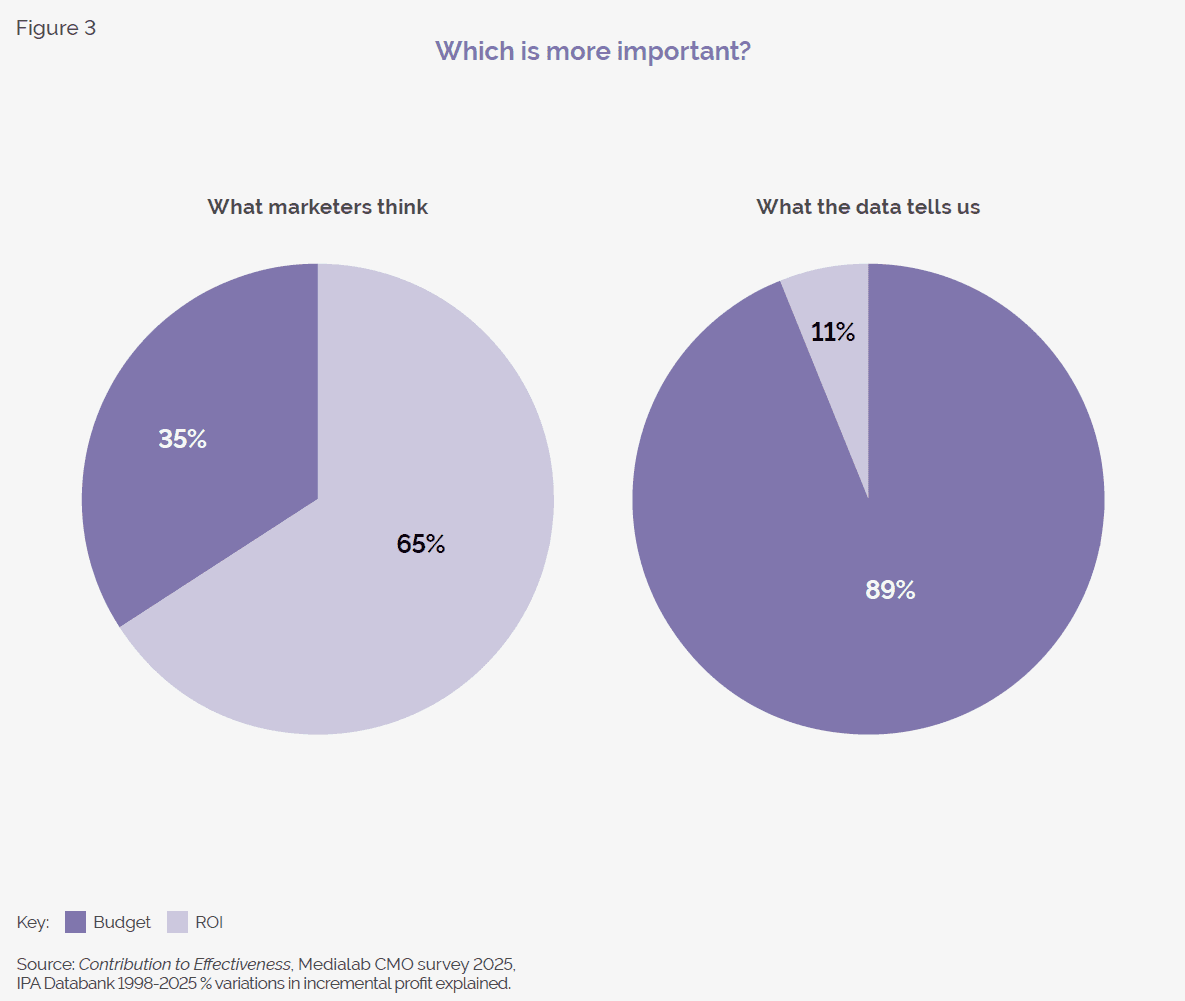
One of the clearest messages in Go Big or Go Home is this: stop obsessing over short-term ROI and focus on what actually drives growth, market share, margin and profit. At the centre of this is budget setting, because advertising’s real strength is still its ability to create scale. That’s a big shift for smaller brands.
Too often, smaller brands operate in constant justification mode, every pound needs to pay back quickly, every channel is judged in isolation, every campaign cut short. The result? A bias toward what looks efficient now, not what builds demand over time.
If you only follow the easiest metrics, you underinvest in what makes brands easier to choose later. So, the job is to reframe the question:
Not: What can we afford to spend?
But: What level of investment and reach do we need to grow?
2. Build reach before you build precision
Another major point in the report is that effectiveness tends to come from the combination of budget, media breadth and creative quality. This is where smaller brands often get boxed in by false trade-offs.
They assume broad reach is for big brands and precision is for small ones.
But, in reality, if growth depends on gaining more buyers, then excessive narrowness can become self-defeating.
Binet and Davis argue for larger media investments, broader reach across channels and bold creative campaigns capable of building fame over time. That does not mean spray-and-pray. It means remembering that the first job of advertising is often to be seen, remembered and mentally available to more people. Small brands need precision, yes. But they also need presence.
They need to look bigger in the market than they are on paper.
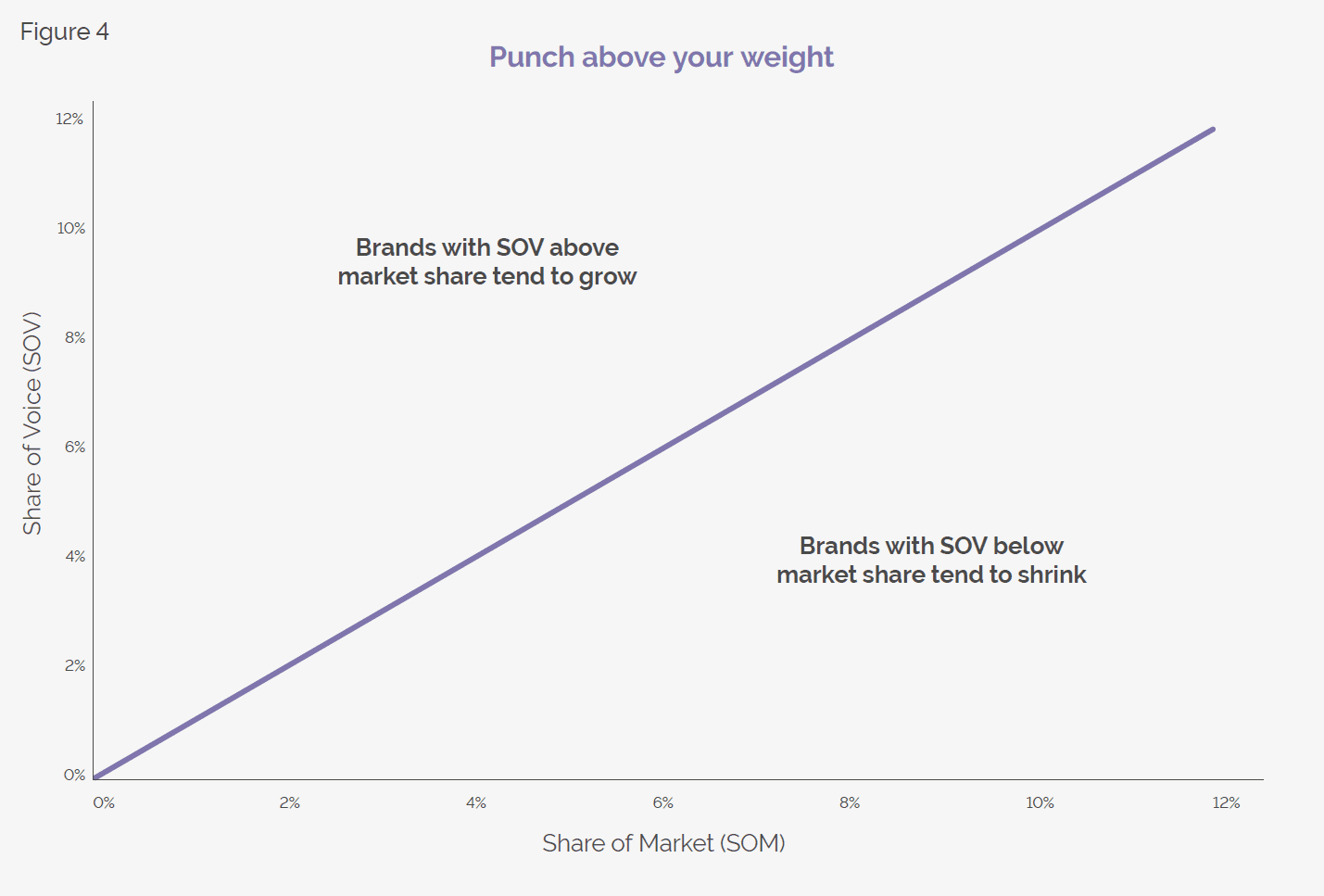
Source: Binet & Davis, Go Big or Go Home, IPA (2026)
3. Use creative to create scale, not just decoration
The third point is probably the most important.
Big brands don’t just look bigger because they spend more; they look bigger because they behave as they belong. The report calls for bolder creative that drives emotion at scale; work people actually feel and remember.
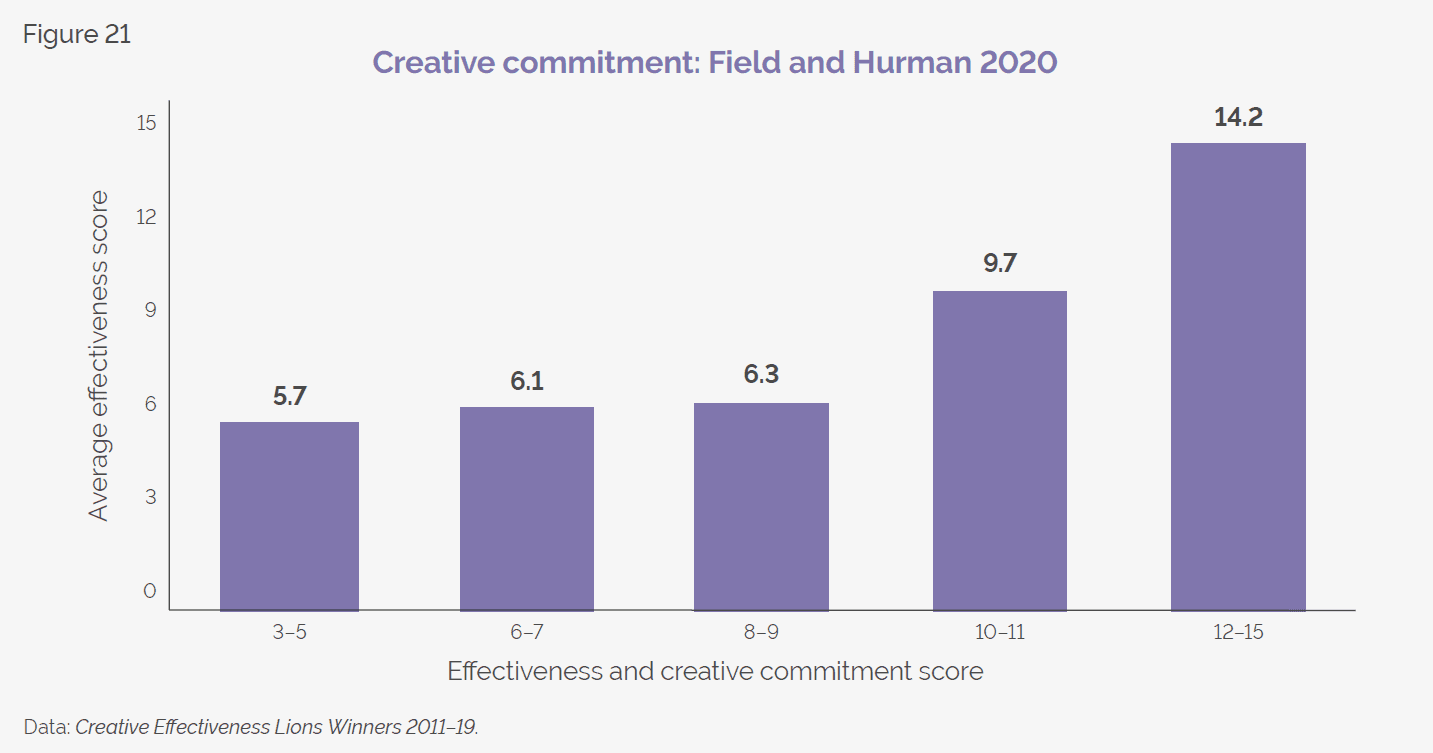
That’s the opportunity for smaller brands. Not to mimic big-brand polish, but to use creativity as a multiplier. When budgets are tight, the work has to punch above its weight, and be more distinctive, more ambitious, more memorable.
Too often, smaller brands play it safe. Work becomes rational, tidy, and easy to explain internally, but forgettable in the real world.
If the goal is to act bigger, creative should not be the bit that gets watered down first.
It should be what helps compensate for the fact you are not the biggest spender in the room. It should be the thing that makes up the difference.
If the challenge is to help small brands think and act more like big brands, I think it comes down to three things.
1. Stop treating efficiency as the strategy
One of the clearest messages in Go Big or Go Home is this: stop obsessing over short-term ROI and focus on what actually drives growth, market share, margin and profit. At the centre of this is budget setting, because advertising’s real strength is still its ability to create scale. That’s a big shift for smaller brands.
Too often, smaller brands operate in constant justification mode, every pound needs to pay back quickly, every channel is judged in isolation, every campaign cut short. The result? A bias toward what looks efficient now, not what builds demand over time.
If you only follow the easiest metrics, you underinvest in what makes brands easier to choose later. So, the job is to reframe the question:
Not: What can we afford to spend?
But: What level of investment and reach do we need to grow?
2. Build reach before you build precision
Another major point in the report is that effectiveness tends to come from the combination of budget, media breadth and creative quality. This is where smaller brands often get boxed in by false trade-offs.
They assume broad reach is for big brands and precision is for small ones.
But, in reality, if growth depends on gaining more buyers, then excessive narrowness can become self-defeating.
Binet and Davis argue for larger media investments, broader reach across channels and bold creative campaigns capable of building fame over time. That does not mean spray-and-pray. It means remembering that the first job of advertising is often to be seen, remembered and mentally available to more people. Small brands need precision, yes. But they also need presence.
They need to look bigger in the market than they are on paper.
Source: Binet & Davis, Go Big or Go Home, IPA (2026)
3. Use creative to create scale, not just decoration
The third point is probably the most important.
Big brands don’t just look bigger because they spend more; they look bigger because they behave as they belong. The report calls for bolder creative that drives emotion at scale; work people actually feel and remember.
That’s the opportunity for smaller brands. Not to mimic big-brand polish, but to use creativity as a multiplier. When budgets are tight, the work has to punch above its weight, and be more distinctive, more ambitious, more memorable.
Too often, smaller brands play it safe. Work becomes rational, tidy, and easy to explain internally, but forgettable in the real world.
If the goal is to act bigger, creative should not be the bit that gets watered down first.
It should be what helps compensate for the fact you are not the biggest spender in the room. It should be the thing that makes up the difference.
If the challenge is to help small brands think and act more like big brands, I think it comes down to three things.
1. Stop treating efficiency as the strategy
One of the clearest messages in Go Big or Go Home is this: stop obsessing over short-term ROI and focus on what actually drives growth, market share, margin and profit. At the centre of this is budget setting, because advertising’s real strength is still its ability to create scale. That’s a big shift for smaller brands.
Too often, smaller brands operate in constant justification mode, every pound needs to pay back quickly, every channel is judged in isolation, every campaign cut short. The result? A bias toward what looks efficient now, not what builds demand over time.
If you only follow the easiest metrics, you underinvest in what makes brands easier to choose later. So, the job is to reframe the question:
Not: What can we afford to spend?
But: What level of investment and reach do we need to grow?
2. Build reach before you build precision
Another major point in the report is that effectiveness tends to come from the combination of budget, media breadth and creative quality. This is where smaller brands often get boxed in by false trade-offs.
They assume broad reach is for big brands and precision is for small ones.
But, in reality, if growth depends on gaining more buyers, then excessive narrowness can become self-defeating.
Binet and Davis argue for larger media investments, broader reach across channels and bold creative campaigns capable of building fame over time. That does not mean spray-and-pray. It means remembering that the first job of advertising is often to be seen, remembered and mentally available to more people. Small brands need precision, yes. But they also need presence.
They need to look bigger in the market than they are on paper.
Source: Binet & Davis, Go Big or Go Home, IPA (2026)
3. Use creative to create scale, not just decoration
The third point is probably the most important.
Big brands don’t just look bigger because they spend more; they look bigger because they behave as they belong. The report calls for bolder creative that drives emotion at scale; work people actually feel and remember.
That’s the opportunity for smaller brands. Not to mimic big-brand polish, but to use creativity as a multiplier. When budgets are tight, the work has to punch above its weight, and be more distinctive, more ambitious, more memorable.
Too often, smaller brands play it safe. Work becomes rational, tidy, and easy to explain internally, but forgettable in the real world.
If the goal is to act bigger, creative should not be the bit that gets watered down first.
It should be what helps compensate for the fact you are not the biggest spender in the room. It should be the thing that makes up the difference.
So what should smaller brands actually do?
If I were to boil this down to one practical takeaway, it would be this: Stop planning like a small brand trying not to waste money. Start planning like a future big brand trying to earn its place.
That means:
Setting budgets against growth ambition, not just affordability.
Broadening reach before performance hits a ceiling.
Using creative to create disproportionate impact, not just tidy execution.
And measuring success in terms that the business actually cares about: growth, margin, profit and future demand.
That is why this report matters. Because it gives sharper language, stronger proof and more urgency to an idea that many of us have been trying to champion for a long time.
Our job is to make small brands think like big brands.
Now, a white paper says the industry needs to do exactly that. And honestly, about time.
If I were to boil this down to one practical takeaway, it would be this: Stop planning like a small brand trying not to waste money. Start planning like a future big brand trying to earn its place.
That means:
Setting budgets against growth ambition, not just affordability.
Broadening reach before performance hits a ceiling.
Using creative to create disproportionate impact, not just tidy execution.
And measuring success in terms that the business actually cares about: growth, margin, profit and future demand.
That is why this report matters. Because it gives sharper language, stronger proof and more urgency to an idea that many of us have been trying to champion for a long time.
Our job is to make small brands think like big brands.
Now, a white paper says the industry needs to do exactly that. And honestly, about time.
If I were to boil this down to one practical takeaway, it would be this: Stop planning like a small brand trying not to waste money. Start planning like a future big brand trying to earn its place.
That means:
Setting budgets against growth ambition, not just affordability.
Broadening reach before performance hits a ceiling.
Using creative to create disproportionate impact, not just tidy execution.
And measuring success in terms that the business actually cares about: growth, margin, profit and future demand.
That is why this report matters. Because it gives sharper language, stronger proof and more urgency to an idea that many of us have been trying to champion for a long time.
Our job is to make small brands think like big brands.
Now, a white paper says the industry needs to do exactly that. And honestly, about time.
" transform="translate(0 20)" width="997px"/></svg>)
Read more




Discuss your next project with us...
To learn more about what we can offer and how we can work together, we’d love to hear from you.
London
Accord Marketing,
1 Waterhouse Square, London EC1N 2ST.
South-West
The Node, 1 Enterprise Road,
Roundswell, Barnstaple,
Devon EX31 3YB.
All enquiries
020 7271 2481
Assume nothing.
Discuss your next project with us...
To learn more about what we can offer and how we can work together, we’d love to hear from you.
London
Accord Marketing,
1 Waterhouse Square, London EC1N 2ST.
South-West
The Node, 1 Enterprise Road,
Roundswell, Barnstaple,
Devon EX31 3YB.
All enquiries
020 7271 2481
Discuss your next project with us...
To learn more about what we can offer and how we can work together, we’d love to hear from you.
London
Accord Marketing,
1 Waterhouse Square, London EC1N 2ST
South-West
The Node, 1 Enterprise Road,
Roundswell Barnstaple,
Devon EX31 3YB
All enquiries
020 7271 2481